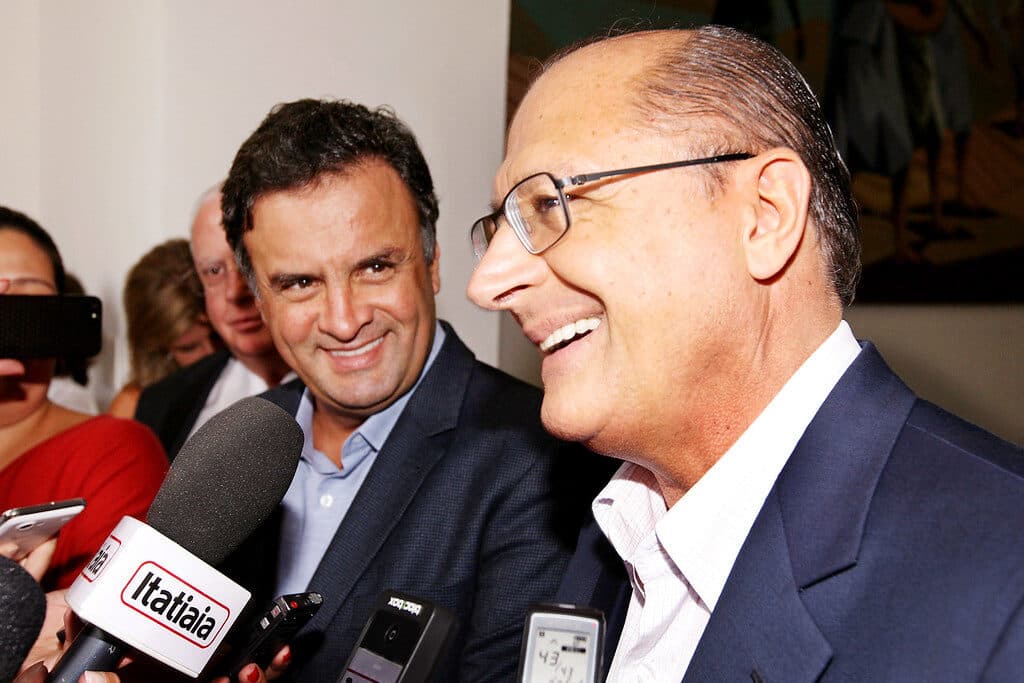
Alckmin told reporters on Tuesday that “the idea is not to retaliate” against the United States in response to the 25% tariff imposed a week ago
Brazilian Vice President Geraldo Alckmin said Tuesday that the government does not intend to retaliate against the United States following the Trump administration’s decision to impose a 25% tariff on certain Brazilian imports.
Hours before the measure took effect, Alckmin sought to soften Brazil’s initial response, after President Luiz Inácio Lula da Silva’s government had previously indicated, in a letter issued shortly after the official announcement, it would begin procedures to apply the country’s reciprocity law in response to the tariffs.
“The idea isn’t retaliation. They say ‘an eye for an eye,’ and what can happen is that both end up blind. Reciprocity means saying, ‘Look, we are the victims of an injustice and we want to correct it; we have the tools to do so at the right time and in the right way,'” said the official, who until April served as head of the Ministry of Development, Industry, Commerce, and Services.
Alckmin argued that the U.S. tariffs are “unfair and unfounded” and said that, “as far as Brazil is concerned… there will always be room for negotiation.” He cited government data showing that Washington maintains a trade surplus with Brazil in both goods and services. He also noted that Brazil’s average tariff on U.S. products is 3.1%, significantly lower than the 25% rate imposed by the United States.
The vice president added that seven of the top 10 products exported by the U.S. to Brazil enter the country with zero tariffs.
At Lula’s request, the Brazilian government is holding meetings with industries affected by the new measures. These sectors represent about 18% of Brazil’s exports to the United States, valued at approximately $7.4 billion.
The U.S. Trade Representative (USTR) cited several concerns such as: Brazil’s electronic payment system PIX, enforcement of anti-corruption measures, intellectual property protections, access to the ethanol market, and alleged failures to address illegal deforestation.
However, President Donald Trump excluded around 2,100 Brazilian products from the tariffs, including meat, some fish products, coffee, oil, rare earth minerals, and works of art. The decision is aimed at limiting potential disruptions to the U.S. market.
Alckmin emphasized the importance of diversifying Brazil’s trade partnerships, highlighting that the country reached a record $349,000 million in exports last year. He also noted that Brazil achieved record export levels during the first half of this year to 54 countries and across 49 different products.
As examples of expanding trade opportunities, he pointed to the Mercosur-European Union agreement, which helped increase Brazilian exports by $2 billion in two months, as well as trade agreements with Singapore and the European Free Trade Association (EFTA).