Central to the proposal is placing the Infrastructure Financing Authority (AFI) at the center of Puerto Rico’s water-system turnaround, assigning the agency a decisive leadership role in modernizing the Superaqueduct and coordinating major water-treatment plant expansions
The proposal, which he provided to Caribbean Business, also calls for expanding the Sergio Cuevas and Enrique “Richie” Ortega water treatment plants.
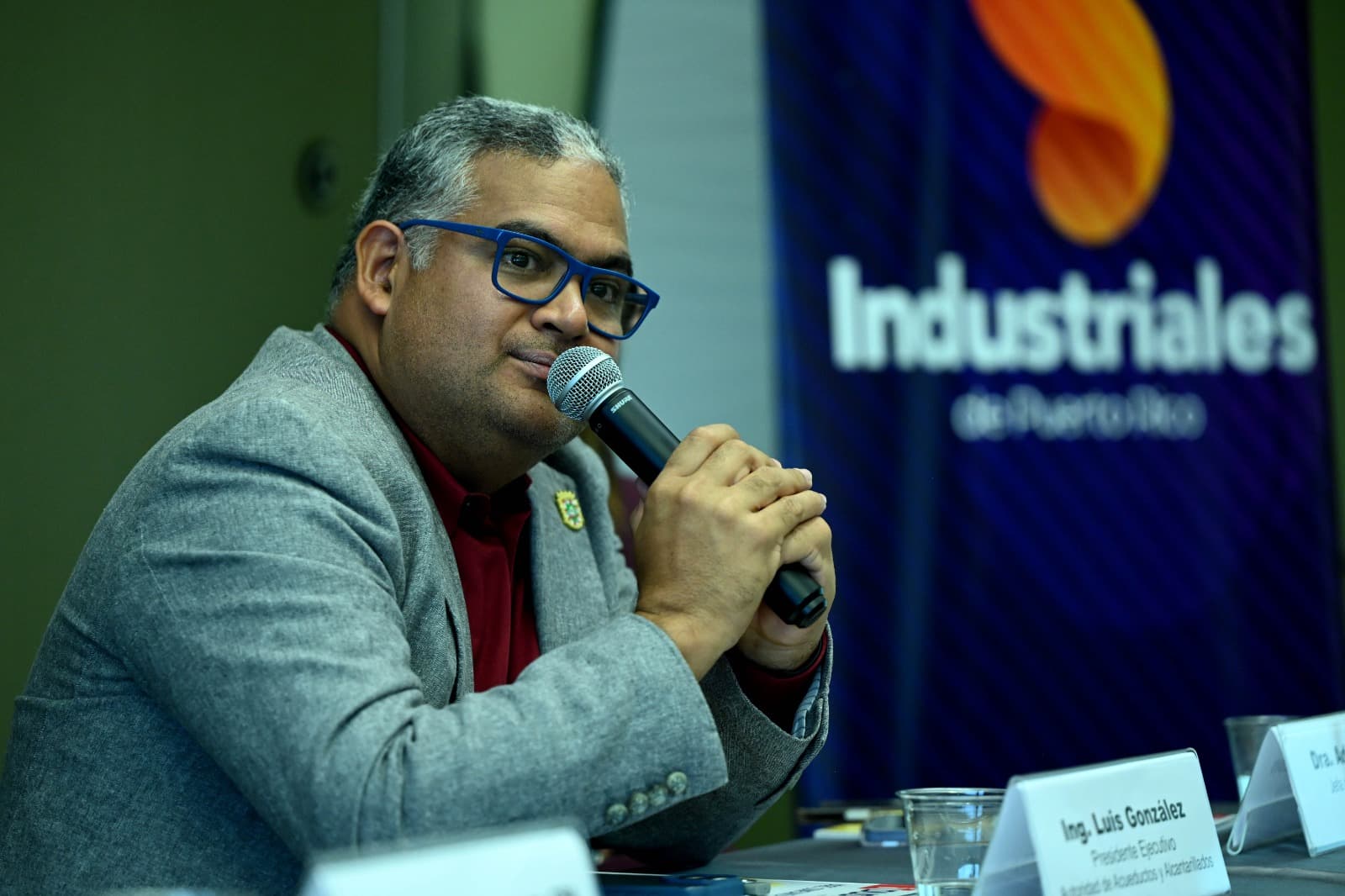
González argued that PRASA already operates the system and does not need AFI inserted as an additional layer of management. “AFI works on project management. They should let the authority, which is the one that manages potable water service, continue doing its job,” he said. While he acknowledged that PRASA has adopted or is planning several of Pesquera’s technical recommendations, he stressed that the proposal to shift leadership of the Superaqueduct is a non‑starter.
During an activity at the PRMA, González turned to the broader challenge facing Puerto Rico’s water system: a deepening drought and the structural vulnerabilities it exposes. Speaking to manufacturers, he described a hydrological landscape transformed by climate change — fewer rain events, more intense storms, and rivers across the eastern half of the Island showing “considerable” declines in flow. The Lake Carraízo reservoir, which normally receives about 410 cubic feet of water, is down to 89 cubic feet of water. The La Plata reservoir is down to 50 cubic feet of water. Reservoirs in Cidra and Canóvanas, which get water from Sierra de Luquillo, are all registering historic lows.
Against that backdrop, González outlined the measures PRASA is pursuing to strengthen long‑term water security. The most significant is expanding reservoir capacity, including new storage at Valenciana and additional reservoirs along La Plata River. He said the Valenciana project alone carries an estimated $100 million cost through the design phase, funded through mitigation dollars. PRASA is expanding the Superaqueduct’s filtration capacity from 100 to 125 million gallons per day, a move that depends on coordinated management of the Dos Bocas reservoir.
PRASA is also evaluating proposals from engineers to build supplementary reservoirs that would capture water during increasingly rare moderate rainfall events.
González emphasized that Puerto Rico must “maximize the water we can store” because intense storms now cause raw water to wash out of catchments before it can be used. Reservoir expansion, he said, is essential to stabilizing supply during prolonged dry periods.
He also urged Puerto Rico to confront long‑avoided strategies such as recycling treated wastewater for potable use — a practice already adopted in parts of the United States. PRASA is studying injection of tertiary‑treated water into coastal aquifers to create a barrier against saltwater intrusion, a growing threat as sea levels rise. Projects in Guayama and the rehabilitated Paso Caguas facility are part of that planning.
By contrast, González was notably cautious about desalination. Although he acknowledged it “cannot be discarded,” he warned that desalinated water is “ten times more expensive” than conventionally treated water and produces a brine waste stream that can damage marine ecosystems. Puerto Rico’s experience in Culebra — where only 40% of processed water was usable, and 60% returned to the sea as concentrated brine — underscores the environmental and financial tradeoffs. “As a people, we have to ask whether we are willing to pay that price,” he said.
González closed with a blunt assessment: Puerto Rico is already in drought, and conservation is the only immediate tool available. Infrastructure solutions — reservoirs, aquifer protection, recycling — require funding, permitting, and years of construction. “The question is who is going to put the money,” he said. “Everyone agrees on the solutions. No one raises their hand to pay for them.”
Puerto Rico’s Drought Expected to Persist Until March
During the activity, meteorologist Ada Monzón told PRMA members that Puerto Rico’s ongoing drought is likely to continue through the winter and into early spring, with meaningful improvement not expected until March 2027.
Monzón said current rainfall deficits—driven largely by a strengthening El Niño event—have pushed the island into a prolonged dry period that any single storm or weather system will not resolve. “We are going to continue like this until December and January, and possibly see improvement by March,” she said, noting that models show persistent below‑normal precipitation for the next several months.
She explained that Puerto Rico has accumulated 12 to 16 inches of rainfall deficits over the past 90 days, with May—typically one of the island’s wettest months—showing shortages of more than 8 inches in some regions. The federal drought monitor currently places 59% of Puerto Rico under drought conditions, with severe drought concentrated in the south.
Beyond the immediate drought, Monzón warned that sea‑level rise and coastal degradation pose escalating risks to Puerto Rico’s infrastructure and economic stability. She said global temperatures are rising faster than anticipated, driving irreversible increases in sea level that are already reshaping the island’s coastline. Using federal modeling tools, she highlighted that Puerto Rico could see one foot of sea‑level rise by 2050, with far more severe flooding possible under higher‑temperature scenarios. In some projections, areas such as Loíza Street, Mayagüez’s PR‑2, and coastal zones in Arecibo, Aguada, Isabela, and Luquillo would face permanent inundation.
Monzón stressed that these climate pressures—drought, extreme rainfall, rising seas, coastal erosion, and higher temperatures—are converging to create a “new hydroclimate” that directly affects business continuity, water availability, and long‑term planning. She urged the private sector to incorporate climate projections into operational and investment decisions, noting that water security is becoming a defining factor for Puerto Rico’s economic resilience.
Industry Leaders Offer Solutions
Engineers, regulators and industry leaders at the activity agreed that Puerto Rico has the tools to strengthen its water system and protect industrial operations, but those solutions must be deployed decisively. The discussion moved beyond diagnosing the island’s vulnerabilities and toward outlining concrete measures to reduce losses, expand reuse, modernize infrastructure and build long‑term resilience.
Independent consultant José Capeles Díaz, who also rejected Pesquera’s plan, stressed that the most urgent priority is addressing physical water losses, which drain millions of gallons daily from the system. He noted that while leak detection is complex, the technology to identify and repair losses exists and should anchor PRASA’s investment strategy over the next five years. Capeles also underscored the need to manage sedimentation in major reservoirs such as Dos Bocas, Carraízo and Valenciano, explaining that extending their useful life is essential to maintaining reliable raw water supply for filtration plants and the Superaqueduct.
While there are reports noting that Puerto Rico loses almost 50% of its water through leaks and theft, González insisted that those numbers are exaggerated. He said there is no study pointing to that assertion.
Eugenio Vives, president of New Technology Systems, pointed to microbial corrosion as a largely unaddressed driver of water loss. He explained that advanced oxidizing treatments—already used internationally—can break down the protective biofilm that accelerates corrosion, reducing losses by an estimated 20 percent. That reduction represents tens of millions of gallons per day and more than $100 million in potential savings. Vives added that private companies are willing to invest in these technologies, signaling that the obstacle is not feasibility but implementation.
For manufacturers, the conversation centered on internal resilience. Environmental engineer Geannette Siberón, CEO at Environmental & Safety Engineering Solutions, urged companies to adopt Water Risk Management Plans, a tool already required by multinational corporations operating on the island. She noted that Puerto Rico has been classified globally as a high‑risk zone for water scarcity for two decades, and industries that fail to plan for reduced availability jeopardize their competitiveness. Siberón emphasized that companies must understand their water sources, evaluate vulnerabilities, reduce consumption, reuse treated water where possible, and prepare for scenarios in which supply drops significantly for extended periods. She reminded attendees that water disruptions cascade into halted production, cooling system failures, boiler shutdowns, and workforce absenteeism.
Regulatory expert Albert Ortiz, president at ETAG LLC, added that Puerto Rico’s framework already supports responsible reuse and recycling. He highlighted pharmaceutical facilities that recycle more than 70 percent of the water they consume, demonstrating that high‑quality reuse is both viable and compliant with federal drinking water standards. Ortiz argued that industries and households alike can adopt water harvesting and efficiency measures without compromising public health, provided they meet the 129 parameters required under the Safe Drinking Water Act.
Infrastructure modernization also took center stage. Arnaldo Bisono, manager of business development at AES Puerto Rico, reiterated the company’s commitment to using treated sanitary water from Guayama for energy production.
During the discussion, panelists agreed that Puerto Rico’s water challenges are significant but solvable. The island already has access to advanced treatment technologies, leak‑reduction systems, reservoir management strategies, industrial reuse models, regulatory pathways and corporate risk‑planning tools. What is needed now is coordinated execution and sustained collaboration between government, industry and the scientific community.
The Manufacturers Association closed the event by emphasizing that water security is inseparable from economic competitiveness, public health, energy generation and long‑term investment. The roundtable, they said, should mark the beginning of a continuous effort to build a shared vision for water management grounded in planning, innovation and resilience.