The Economic Development Bank (EDB) is preparing a significant overhaul of its youth lending program following the enactment of Law 103‑2026, which amends the 2004 statute that created the Financial Opportunities Program for Young Entrepreneurs.
The new law requires the EDB to establish a formal referral system to agencies responsible for permits, certifications and incentives — a shift that could reshape how young entrepreneurs access capital and navigate Puerto Rico’s often complicated regulatory landscape.
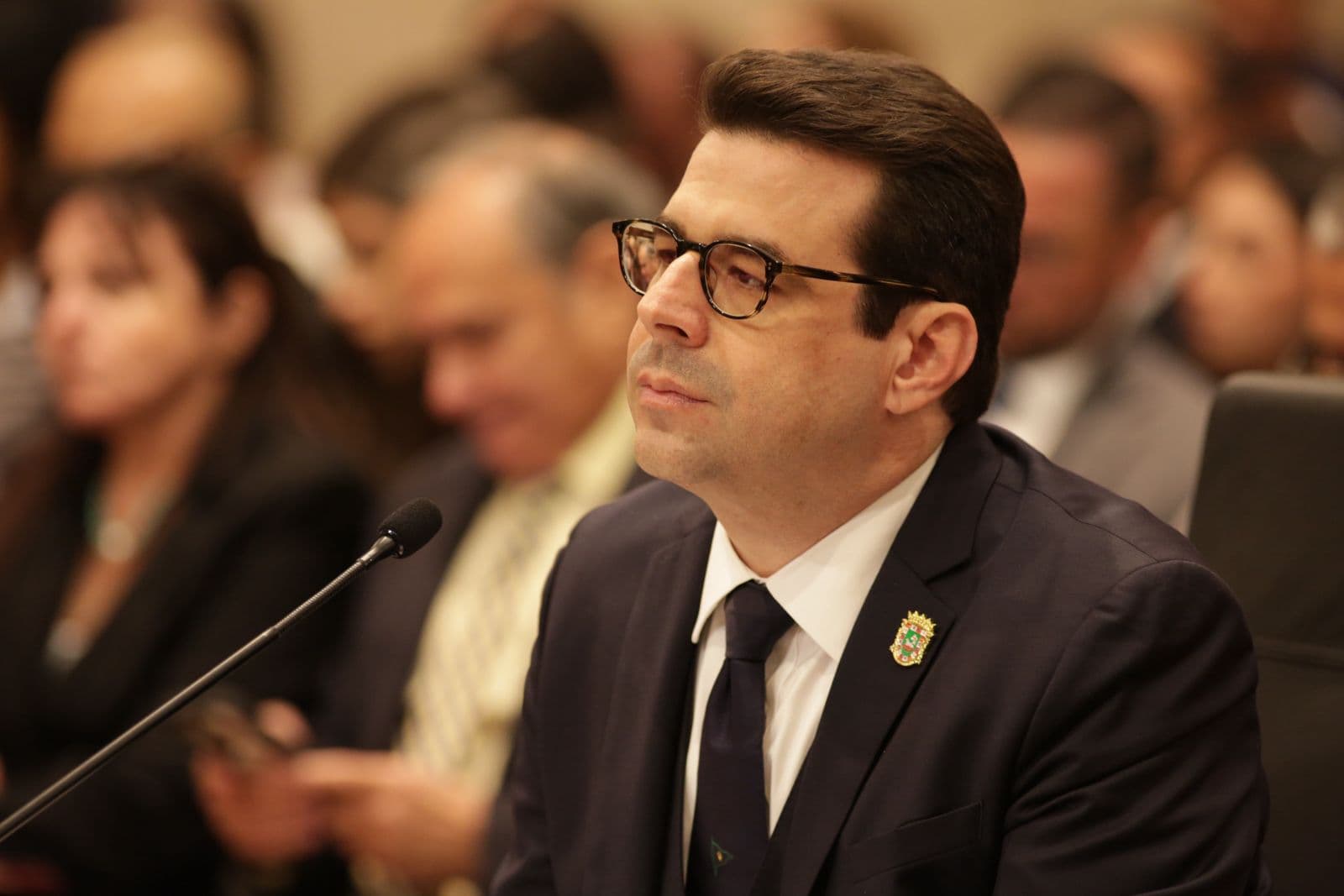
Although the EDB has long operated a youth loan program known internally as Visionary Youth (“Jóvenes Visionarios”), EDB President Josué E. Rivera Castro acknowledged that the new law imposes obligations that go beyond financing. “We are in the process of implementation… part of the effort has been waiting for certain things to happen,” he said, citing the recent confirmation of a new Department of Economic Development & Commerce (DDEC) Secretary and the Puerto Rico governor’s pending permitting reform.
Last year, La Fortaleza established a task force on permits that issued a report on the importance of reducing bureaucracy in the permitting process to help promote private sector investment.
Law 103-2026’s language is explicit: the EDB must “develop a system of referrals to the agencies called to grant governmental benefits, issue certifications, permits and others, to expedite these processes in the benefit of the young entrepreneurs.” The new law also directs the bank to “ease and/or release” financing requirements and allow capital contributions ranging from 0% to 10% of the project cost.
The EDB president described the moment as one of alignment — between the bank, DDEC, the Permits Management Office (OGPe), and the governor’s broader permitting agenda. But he also conceded that the bank’s current referral process is rudimentary: “We do it the traditional way… an email. That’s the referral program.”
A Program Already in Motion — But Not Yet Modernized
The EDB’s Visionary Youth program offers loans of up to $25,000 for entrepreneurs aged 21 to 35. The product is intentionally flexible: no collateral, no initial capital contribution, a fixed 6% interest rate, and up to six months’ moratorium on principal. Terms vary by use, consisting of five years for working capital, seven years for equipment, and 10 for improvements.
The bank is evaluating whether to eliminate the initial fee entirely. “We’re in that internal process now — whether we eliminate the charge or keep it,” Rivera Castro said.
To comply with the new law’s requirement for expedited treatment, the EDB has already instructed staff to prioritize youth applications: “If a young person applies, the instruction is to attend to it with greater priority and move it forward in the pipeline.”
But the EDB president emphasized that full implementation depends on interagency coordination. The bank is waiting for the new DDEC secretary’s onboarding and for clarity on the governor’s permitting reform, which could alter the regulatory framework that the referral system must plug into. “We’ve been cautious… the permitting structure in place is not necessarily the one the governor intends to prevail,” he said.
The bank is also working with the Puerto Rico Industrial Development Company (PRIDCO) and exploring a digital platform to track referrals — a shift from the current email‑based process. “One thing is sending a referral by email; another is giving it follow‑up so we can comply with the purpose of the law.”
A Young Entrepreneur’s Reality: Funding Helps, But Gaps Remain
For small businessowner Odalys Alicea, owner of Artemisa Bride in Carolina, the EDB loan was the difference between securing a storefront and losing it. But her experience also illustrates the limitations of the current program.
She applied for a $50,000 loan under the Women Entrepreneurs Program. Instead, she received $25,000 under the youth entrepreneurs’ program — without explanation. “I asked for 50, and they gave me 25. They didn’t explain why,” she said.
The approval took roughly three months — a long enough waiting time that her landlord nearly leased the space to someone else. “I was about to… the owner was going to give it to another person. Just the day after he told me that, they called to say it was approved,” Alicea said.
The $25,000 loan covered rent and part of her initial inventory, but not all. “The hardest part was consolidating inventory… we had to put the floor, the air conditioner, certain things ourselves,” she said. Her grandfather helped install the tiles.
Still, the program’s moratorium was crucial for her small company: “That’s why I chose them… the payments have been super comfortable.”
Alicea is now preparing to launch her first full bridal collection in November at Casa de España — and hopes to become Puerto Rico’s first designer exporting locally made bridal gowns to boutiques abroad.
Her story underscores a recurring theme: the EDB loan program is helpful, but sometimes insufficient without municipal incentives, DDEC grants and/or private capital. The bank president acknowledged this, noting that young entrepreneurs often combine the $25,000 loan with DDEC grants of $15,000–$30,000 and municipal subsidies that vary widely — from $10,000 in San Juan to $50,000 in Aguadilla.
A Growing Youth Ecosystem — But Still Disconnected
While Alicea represents the financing side of the youth entrepreneurship landscape, Víctor Rivera, producer and host of the podcast “Voces del Cambio,” represents the visibility and ecosystem side. He participates in DDEC’s young entrepreneur decree program and recently proposed a collaboration to highlight small businesses through media content.
His assessment of the entrepreneurial environment is blunt: “Many young people, when you present the opportunity or give them a direction, they get interested… but they don’t know where to go.”
He argues that agencies should not rely solely on digital campaigns. “They should go into universities… many young people are about to graduate and say, ‘I don’t know what I’m going to do now.’”
Rivera’s proposal involves profiling five young entrepreneurs on his platform. He remains convinced that storytelling and exposure are essential tools for economic development.
His perspective aligns with the legislative intent behind Law 103‑2026, which emphasizes reducing bureaucratic barriers and expanding access to entrepreneurial training. The law mandates a Program of Entrepreneurial Training that includes market studies, viability analyses, business plans, marketing plans and financing proposals.
Sectors Poised for Growth — and the EDB’s Strategic Priorities
The EDB president sees strong potential in technology, tourism and specialized services. He also highlighted a new venture capital program with the Puerto Rico Science & Technology Trust, which could inject equity into high‑growth startups.
The bank is operating with fresh capital: $39 million from the U.S. Treasury under the State Small Business Credit Initiative program. There are no quotas for youth lending. “If 100 cases come in, we attend to all 100 according to available capital,” he said.
Approval timelines vary widely. Some cases close in 60 days; others take months if applicants struggle to provide documents. The EDB does deny applications — typically for insufficient income, lack of industry experience, or credit issues. But denials come with guidance: “We don’t want what happened before, when the bank had high delinquency and had to sell its portfolio,” said the EDB president, noting that delinquency rate is now at 3.8%, the lowest in decades.
Implementation Challenges Ahead
The biggest challenge is structural: building a referral system that integrates permitting, incentives and certifications across multiple agencies — all while the permitting framework itself is under reform.
The law requires OGPe to update its digital systems to expedite the issuance of youth permits. The EDB must coordinate with DDEC’s youth and labor development programs. And municipalities must align their incentive codes with the new referral pipeline.
The EDB president summarized the task plainly: “What we seek now… is to implement that internal referral system, which is the portion we’re missing to comply with the implementation of this law.”
What is clear is that Puerto Rico’s young entrepreneurs are eager, ambitious and increasingly visible. With Law 103‑2026, the BDE now faces both an opportunity and a mandate: to transform “Jóvenes Visionarios” into a more agile, integrated and supportive engine for youth‑driven economic growth.