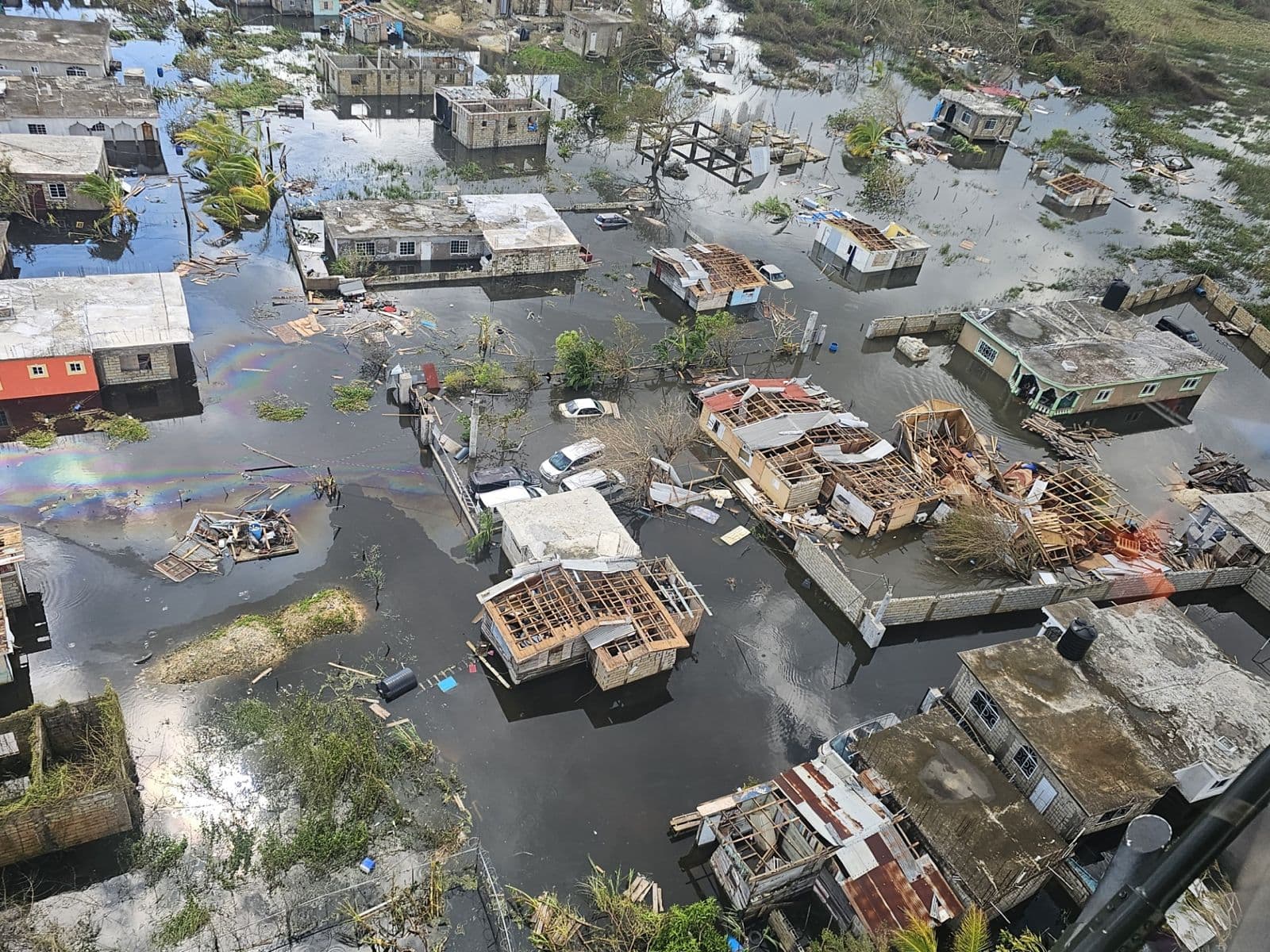
The Caribbean is entering a new era of infrastructure urgency—one shaped as much by climate change as by the inability to execute. In just two years, Hurricanes Beryl and Melissa tore across Jamaica (2024 and 2025, respectively), flattening communities, washing out roads, and exposing the fragility of the region’s infrastructure systems.
The storms also revealed something deeper: the Caribbean’s infrastructure challenge is no longer theoretical. It is immediate, expensive and accelerating.
That urgency framed a recent regional webinar featuring KPMG’s Jack Mackenzie, CIBC Caribbean’s Kemar Polius, Aecon Concessions Director Luc Allary, and IFC Caribbean Hub Lead Michelle Ottey. Their message was blunt: the capital exists, but the systems to deploy it do not.
Notably absent from the discussion was Puerto Rico—despite being the Caribbean jurisdiction with the largest infrastructure funding pipeline by far. The island has more than $120 billion in federal reconstruction and infrastructure allocations, yet it continues to struggle with slow disbursement, complex procurement rules, and capacity constraints that mirror many of the issues raised during the webinar.
Puerto Rico offers a vivid real‑time example of what happens when massive funding meets limited institutional capacity. More than nine years after Hurricanes Irma and Maria slammed the Island, billions of dollars remain tied up in procurement reviews, permitting backlogs, and administrative bottlenecks.
“The issue is not a lack of capital but the absence of modernized systems, staffing and project‑delivery mechanisms capable of moving large, complex projects from planning to execution,” one panelist noted. Puerto Rico’s experience underscores the webinar’s central argument: money alone does not build infrastructure, capacity does.
A Region Hit Twice in Two Years
The panelists repeatedly returned to the issue of hurricanes—not as isolated events, but as a pattern. “The one‑in‑100 storms are now coming every couple of years,” Ottey said. “Look at Jamaica. You have Beryl. The year after that… Melissa hit in the same spot.”
The consequences are severe. Governments rebuild a bridge, only to see it washed away in the next hurricane season while they are still repaying the original loan. Debt burdens rise, infrastructure gaps widen, and the cost of inaction grows exponentially.
Even before these hurricanes, the region faced a massive infrastructure backlog. Mackenzie noted that the British Overseas Territories alone have more than $2 billion urgent projects in the pipeline—such as ports to waste facilities—but they cannot borrow enough to build them. “If you were to give us the $5 billion, you could probably fill that pretty quickly,” he said. “But these countries are at [their] fiscal limits. The capital isn’t the problem—other factors are.”
Those factors include outdated procurement systems, limited project‑preparation capacity, and the absence of modern public-private partnership (PPP) frameworks capable of handling long‑term, performance‑based contracts.
Banks are Ready to Lend—if Projects are Bankable
Despite the climate shocks, Polius emphasized that the financial system in the region remains strong. “Across the Caribbean, we have relatively modest loan‑to‑deposit ratios, which suggests excess liquidity,” he said. “The capital is there, the risk appetite is there—especially if you’re partnering alongside MDBs [Multilateral Development Banks].”
CIBC alone has deployed more than a billion dollars in infrastructure financing in the past five years. But Polius stressed that financing depends on project readiness: “The project preparation and regulatory capacity to execute is very important to accelerate the growth we’re all looking for.”
For Ottey, the hurricanes underscore a deeper structural problem: most Caribbean procurement systems were designed for short‑term purchases, not 30‑year climate‑resilient PPPs. “Government procurement processes… don’t contemplate procuring long‑term for 20, 25, 30 years for performance‑based contracts,” she said. “You’re no longer procuring outputs—you’re procuring outcomes.”
If she had $5 million to invest, Ottey said she would put it into “capacity building for government counterparts, procurement frameworks, policy frameworks, and ensuring proper legal and regulatory frameworks. Because if I’m an investor, all I have is the cash flows that project generates.”
Jamaica Becomes the Region’s Test Case
The recent hurricanes have forced Jamaica to rethink how it delivers infrastructure at scale. Following Melissa, the government created the National Reconstruction and Resilience Authority to fast‑track rebuilding. The move has sparked debate over whether it represents a bold solution or a bypass of established oversight.
“This has the ability to be transformational,” Ottey said. “But others are asking if this is a way of circumventing due process. It’s a balancing act between speed of execution and ensuring the guardrails are on.”
Jamaican Prime Minister Andrew Holness is expected to address the issue at the CARIF conference in September.
If the recent hurricanes made anything clear, it is that resilience is no longer optional. Allary said Aecon is increasingly required to design to Category 5 hurricane standards, driven by insurers and lenders who have recalibrated their risk models after repeated storms. “What we were doing 10 years ago and what we’re looking at now are very, very different,” he said. “Sustainability is a key component.”
Ottey pointed to the BMR Energy Limited’s wind farm in Jamaica—built to withstand Category 4 storms—which survived direct hits from both Beryl and Melissa. “The way we build is important,” she said. “Climate is no longer a nice‑to‑have. It’s a must‑have.”
The Prenup Every PPP Needs
Beyond climate challenges, the panelists emphasized the importance of robust dispute‑resolution mechanisms. “Time is always best spent up front,” Polius said. “If we’re talking project finance, you need a strong contractual framework… predictability in terms of your contractual outcomes.”
Ottey was even more direct: “When we get into a PPP contract, honestly, we need to sign a prenup before we go down the aisle. We need to decide who’s going to get involved if things go wrong.”
Predictability—of cash flows, of legal outcomes, of contract enforcement—is what makes a project bankable.
Despite the pattern of hurricanes and the structural challenges, the panelists were optimistic. The Caribbean has a deep pool of private capital, a growing pipeline of renewable and digital projects, and more than two decades of PPP experience to draw from.
What the region needs now is the ability to execute. “Sharing experience makes a huge amount of difference,” Mackenzie said. “Having project managers and project teams who have experience with [PPPs] and sharing that around the region can really help with bankability.”
The stakes are higher than ever. With climate shocks intensifying and infrastructure needs mounting, the region is at a pivotal moment. The recent hurricanes have made the cost of inaction painfully clear. The money is waiting. The investors are ready. The question is whether Caribbean governments can build the systems, skills and frameworks needed to unlock it.