Fifty-seven years ago, on August 1969, thousands of Puerto Ricans living in New York flooded the streets of Manhattan to welcome and honor the astronauts of Apollo 11, the first Earth mission to land on the Moon. The Moon landing was no small feat, and that is why thousands of other New Yorkers lined the […]
Fifty-seven years ago, on August 1969, thousands of Puerto Ricans living in New York flooded the streets of Manhattan to welcome and honor the astronauts of Apollo 11, the first Earth mission to land on the Moon.
The Moon landing was no small feat, and that is why thousands of other New Yorkers lined the streets of the Big Apple to catch a glimpse of the now legendary astronauts during the tickertape parade in their honor. But for Puerto Ricans there, the occasion was extra special.
Since the early morning hours of that Wednesday in August, buses filled with Puerto Ricans from Brooklyn, the Bronx, El Barrio and other city boroughs started concentrating in the lower Broadway area answering the call of New York’s “Borinquen Lions Club,” which had called on them to come and salute the hero astronauts. Of course all three astronauts –Neil Armstrong, Edwin “Buzz” Aldrin and Michael Collins– were heroes, but for Puerto Ricans there, and here on the Island, it was as if they were welcoming one of their own.
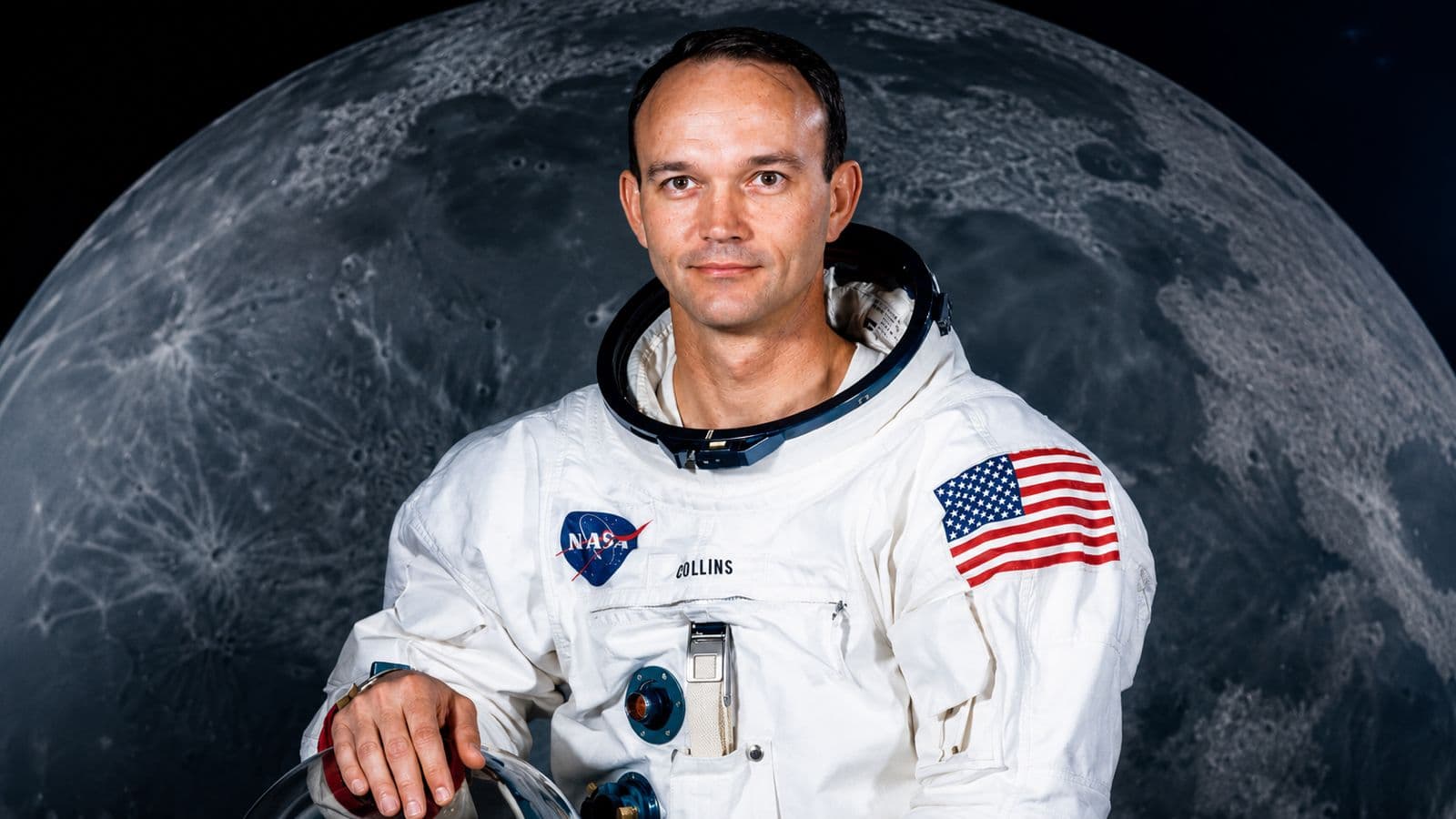
United Press International (UPI) reported that Puerto Ricans were waving their own flags and banners saying, “We love you” and “We are proud of you Collins.” And indeed they were, since Apollo 11’s command module pilot Michael Collins had spent part of his childhood in Puerto Rico.
The Apollo 11 Crew
The Apollo 11 crew consisted of three astronauts: Mission Commander and Lunar Module (Eagle) pilot Neil Armstrong, Lunar Module pilot Edwin “Buzz” Aldrin, and Command Module (Columbia) pilot Michael Collins. Of the three, only Armstrong and Aldrin got to walk on the Moon, while Collins stayed in the Command Module orbiting the Earth’s only natural satellite until his crewmates completed their mission on the lunar surface.
Considered “the loneliest human being in history” after spending several hours alone in space, Collins was in charge of performing the precise orbital maneuvers required to intercept, dock with, and retrieve the Eagle’s ascent stage when it returned from the lunar surface.
All three astronauts had previous space travel experience, as they had all participated in NASA’s Project Gemini in 1966.
Armstrong was the Command Pilot of Gemini 8 (March), while Collins was the pilot of Gemini 10 (July), and Aldrin piloted Gemini 12 (November).
Collins in Puerto Rico
Born in 1930, Collins was the youngest son of Major General James L. Collins, commander of the U.S. Army Puerto Rico Department from 1941 to 1943.
Little is known about young Michael during his years in Puerto Rico, except for what he himself revealed during some interviews or posted in his social media accounts.
In a news article published in El Mundo newspaper on July 1969, columnist Eliseo Combas Guerra cited Collins as saying, in a then interview, that one of his fondest memories of Puerto Rico was “the more than 400-year-old building” where he lived with his family. Collins, then a 10-year-old boy, was referring to Casa Blanca, located at the end of San Sebastian Street in Old San Juan, which up to 1966 served as the official residence of the commanding officers of the U.S. Army in Puerto Rico.
“Its walls were so thick that they could withstand a cannon shot,” Collins said at the time.
More recently, and a year before his death in April 2021, Collins posted on his Facebook page about his first experience flying.
“In Puerto Rico, I also took my first airplane ride, in a small twin-engine amphibian, the Grumman Widgeon. The pilot even let me steer a little bit, and I jerked the nose up and down unevenly, trying to heed the pilot’s advice to “keep her on the horizon.” My father watched all this from the rear of the plane with obvious amusement,” he wrote.
In August 1969, in his regular column “En Torno a La Fortaleza” (“About La Fortaleza”) in El Mundo, Combas Guerra recounted how then-Governor Luis A. Ferré came to meet Collins during a presidential banquet in honor of the Apollo 11 astronauts.
Then-U.S. President Richard M. Nixon, who had a close relationship with Ferré, designated the governor as “host” of one of the tables at the banquet. Some time later during the event, Nixon distinguished Ferré by walking up to his table to greet him, accompanied by Collins.
“According to the governor’s account of the occasion, after greeting him, Collins started reminiscing about his ‘wonderful youth years in Puerto Rico,’” Combas Guerra wrote.
The seasoned newspaperman went further and mentioned how young Michael Collins had atended Saint Johns School in Condado first, and Academia del Perpetuo Socorro later, two well-known private schools in Puerto Rico. Combas Guerra also recounted how the youngest son of Major General James L. Collins was elected Children’s King of the 1942 Ponce de León Carnival and Children’s King of El Escambrón Beach Club, both at the same time.
In January 1942, in El Mundo’s Home section, the first announcement was made that Michael Collins and Marymac [Mary Mackenzie] Malcolm had been elected Children’s King and Queen of both venues. The news article anticipated that both children “will preside a very picturesque parade during which Marymac will perform a poetic representation of the Universal Spirit of Peace.”
It must be noted that, like Michael, the young queen was also the daughter of a prominent American government official, then-Puerto Rico’s Attorney General George A. Malcolm, who later became a U.S. Supreme Court Justice. Marymac went on to become a medical doctor and led a very successful life in California. She died in 2013.
Given the degree of involvement that the Collins family had with the Puerto Rican community, albeit perhaps those who were the most affluent, and if the remarks in Combas Guerra’s column hold any truth about Collin’s father being “one of the island’s most popular military commanders,” it would not be a surprise to surmise that the entire Island was hoping “God would protect Mike Collins.”
Thus, the people of Puerto Rico gave a proud and very welcoming response to the call to welcome Collins and his fellow astronauts back to Earth at the New York City parade.