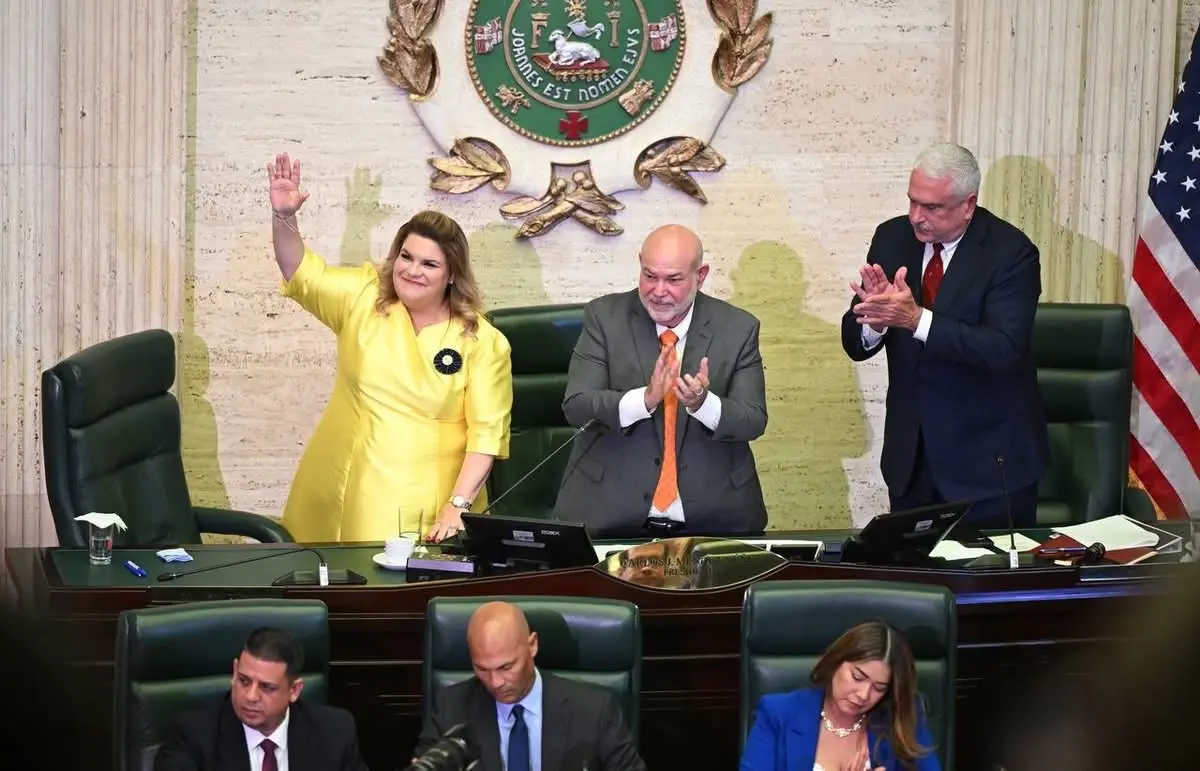
San Juan- Puerto Rico Governor Jenniffer González used her second State of the Commonwealth Address Thursday to present what her administration characterized as a measurable record of fiscal discipline and economic expansion — pointing to $2.6 billion in committed private investment, record private-sector employment, and a second consecutive balanced budget as evidence that the island’s economic trajectory has fundamentally shifted.
These numbers speak for themselves: 5,700 new jobs committed in the manufacturing sector, 23 companies that have announced they will establish or expand operations.
Among the firms cited: Amgen, Eli Lilly, Stryker, PharmaEssentia, Terumo, and CooperVision — a roster that signals renewed confidence in Puerto Rico as a life sciences and advanced manufacturing jurisdiction. The Governor attributed the investment surge to Executive Order 2025-012, which established an aggressive reshoring and investment promotion framework focused on production and manufacturing.
ECONOMY: RECORDS ACROSS THE BOARD
The economic indicators González presented painted an unambiguously positive picture for business leaders. Puerto Rico’s unemployment rate stood at 5.6% — described as the lowest sustained rate in the island’s history — while the labor force participation rate reached 44.5%, its highest level in 16 years. Private-sector employment hit 767,400 jobs, an all-time high, contributing to a total employed workforce of 1,165,000 as of March 2026, the strongest figure since 2008.
On the export front, Puerto Rico closed 2025 with $62.4 billion in exports, a 3.6% increase year-over-year, and a trade surplus of $7.4 billion — up 30%. New business formation also set records: 25,437 new corporations were registered in 2025, a 16.1% increase over 2024 and the highest figure in Puerto Rico’s history. Active commercial establishments reached 51,214.
Tourism, another pillar of the Governor’s economic strategy, welcomed more than 7 million visitors in 2025, including 1.6 million cruise passengers across 563 port calls. Expansions from Royal Caribbean and Carnival are projected to generate a combined $90 million in economic impact through 2028. Puerto Rico will also serve as Principal Partner of FITUR 2027 — the world’s largest tourism trade platform — a positioning González said would open direct access to European markets.
FISCAL AFFAIRS: A SECOND BALANCED BUDGET
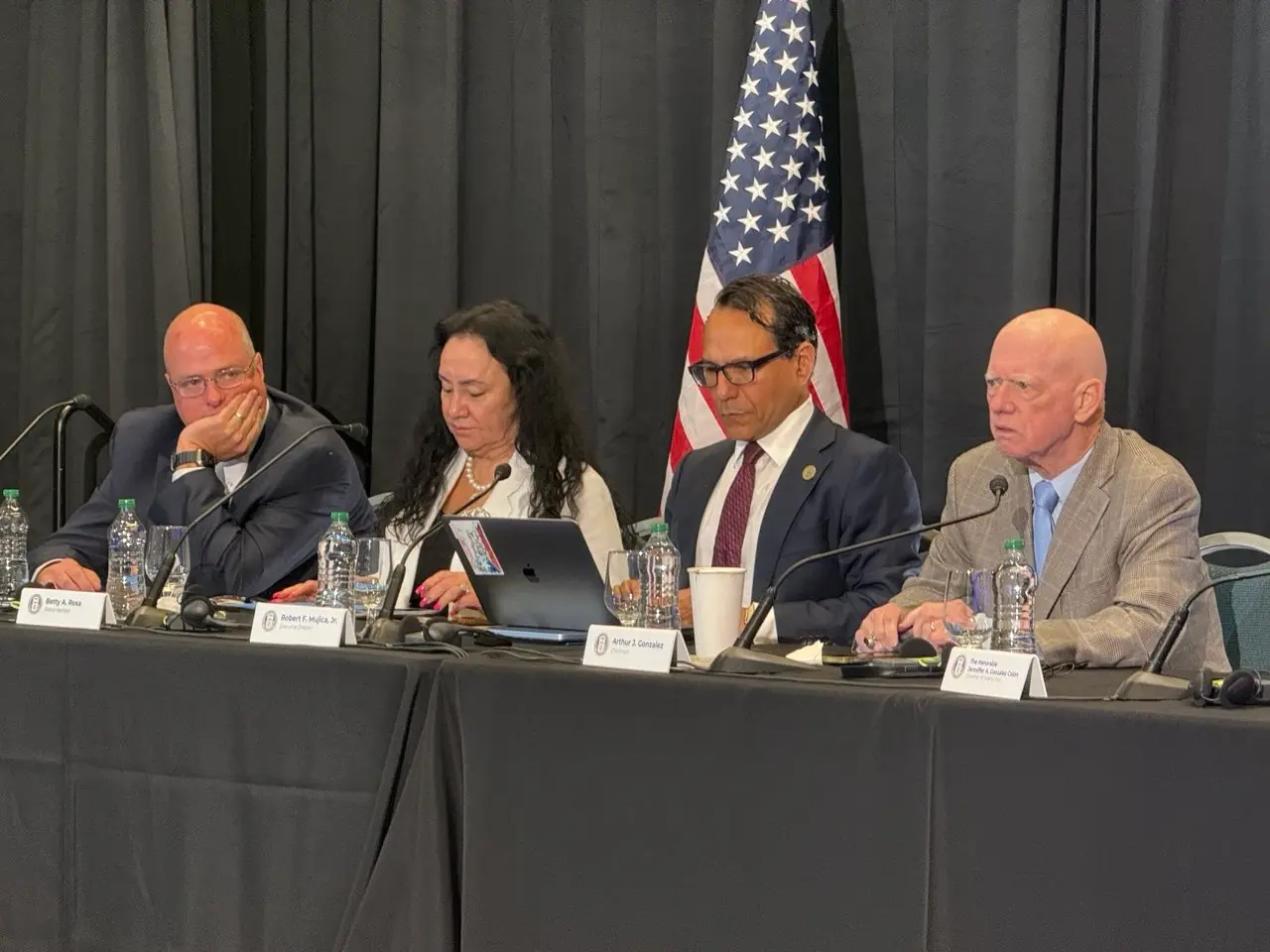
On the fiscal front, González announced that Puerto Rico is on track to deliver its second consecutive balanced budget certified by the Financial Oversight and Management Board — a milestone with direct implications for the island’s path out of PROMESA oversight. Federal law requires four consecutive certified balanced budgets as a condition for the Board’s exit.
The proposed FY2026-2027 consolidated budget totals $33.57 billion, with $13.18 billion from the General Fund. Key allocations include $82.1 million for permanent road improvements, $228 million for municipalities, $23.7 million to strengthen Medicaid, and $44 million for police salary scale updates.
In a notable governance shift, the Office of Management and Budget (OGP) led the budget formulation process for the first time since PROMESA’s enactment — a transfer of fiscal leadership away from the Board that González framed as a structural step toward sovereignty over public finances. The Board acknowledged the progress, stating that Puerto Rico is ‘closer to complying with PROMESA.’
González also announced that her administration will distribute $554 million in taxpayer checks — the largest single return of funds to contributors in the island’s history — enabled by the fiscal surplus and approved by the Oversight Board. Eligible recipients earn up to $150,000 annually.
PERMITTING REFORM: ONE AGENCY, ONE LAW
For the business community, perhaps the most consequential policy proposal in the address was the new Unified Planning and Permits Code — legislation González is pressing the Legislature to approve before the end of the ordinary session this summer.
The Code would consolidate 45 fragmented and often contradictory permitting laws into a single agency, a single application, and a single regulatory standard. The Governor cited dramatic administrative gains already achieved under her tenure: average permitting times for unique permits fell from 82 days to 11 days; construction permits dropped from 97 to 29 days; and environmental determinations were cut from 17 to just 5 days.
“I want to sign the Planning and Permits Code this summer to help our business owners open their businesses, accelerate economic development on our island, and promote the economic prosperity and freedom we all want.”
Small and medium businesses represent 98% of all employers on the island, González noted, making permitting reform a direct lever on job creation and economic activity.
ENERGY: GENERATION GAINS, LUMA LITIGATION
The Governor reported that Puerto Rico has added 1,667 megawatts of additional generation capacity to the grid since her administration began pursuing energy emergency repairs with federal support — with 937 additional megawatts expected in coming months as plants at San Juan, Palo Seco, Aguirre, Cambalache, and Mayagüez undergo modernization.
A conversion of several generating units from diesel and heavy fuel oil to natural gas is projected to yield $95 million in annual fuel savings — reductions the Governor said would translate directly into lower electricity bills. Meanwhile, the installation of Tesla battery systems — a $700 million federal investment totaling 430 MW of storage — is expected to reduce load-shedding events by 90%.
On the LUMA front, González confirmed that her administration has filed two lawsuits aimed at terminating the transmission and distribution operator’s contract, and that federal courts have ruled the cases will be heard in local courts. Active negotiations with prospective replacement operators are underway.
“If a contract does not serve the people, it gets canceled.”
LOOKING AHEAD
González closed with a message calibrated as much for investors and creditors as for the general public — invoking Moody’s March 2026 report on Puerto Rico, which highlighted record employment figures, fiscal discipline, economic resilience, and grid improvements as signals of a changed credit environment.
With the permitting overhaul, LUMA replacement, and ERP financial management system launch scheduled for July 7 all on the near-term horizon, the administration is positioning 2026 as a year of structural — not merely incremental — change for Puerto Rico’s business environment.